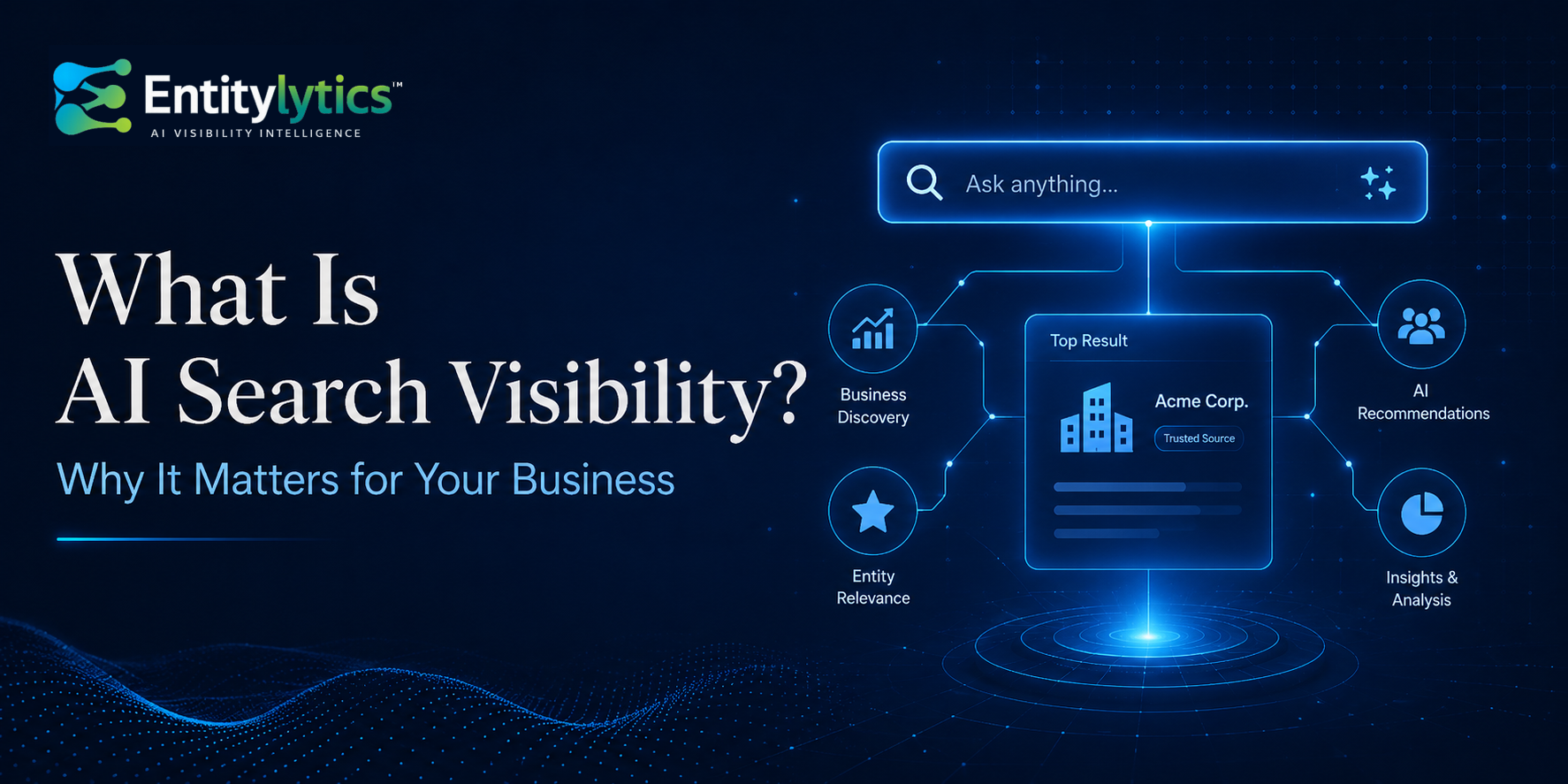
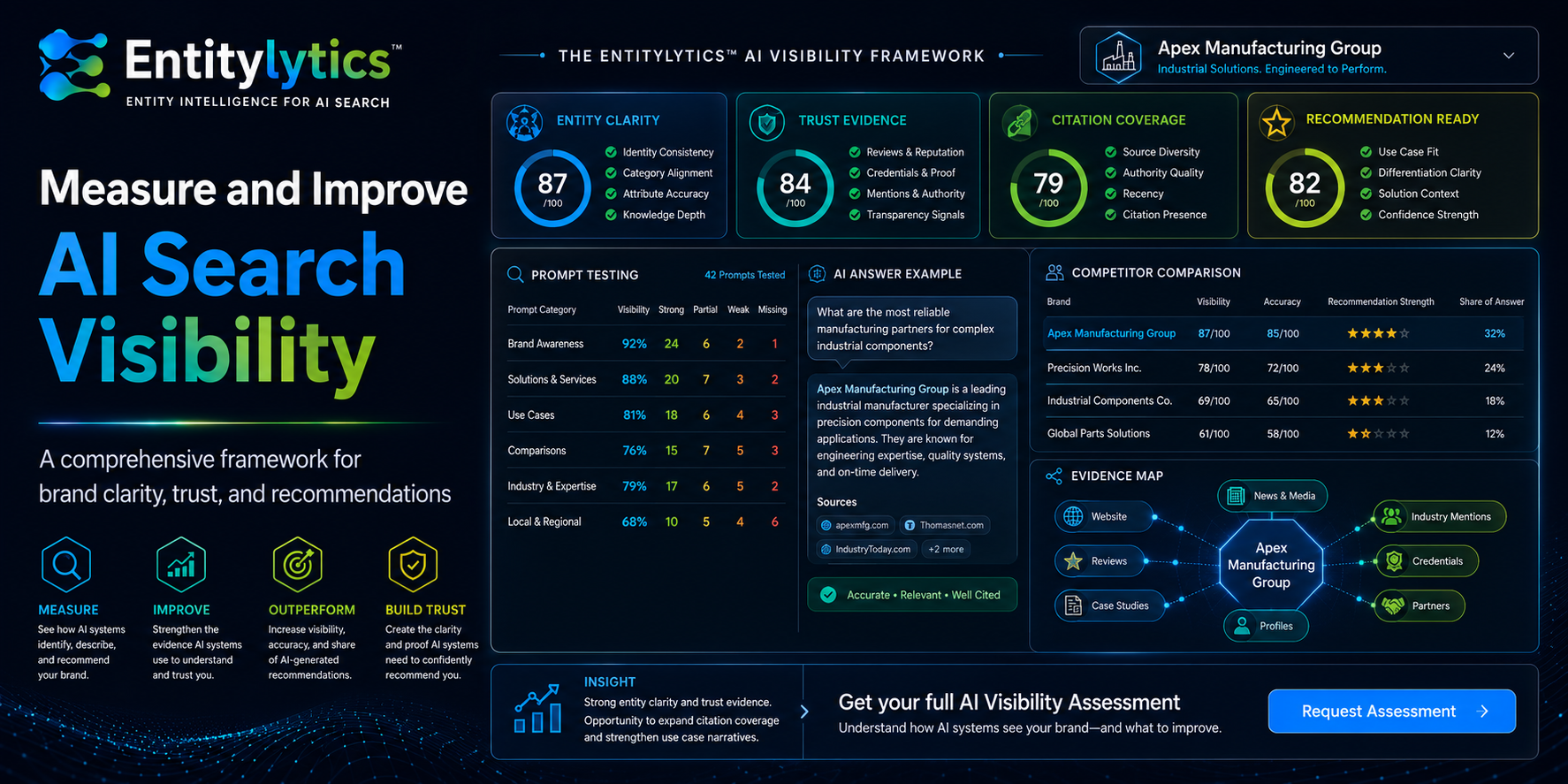
AI search visibility is the degree to which your brand is found, understood, accurately represented, cited, trusted, and recommended by AI-driven search and answer systems.
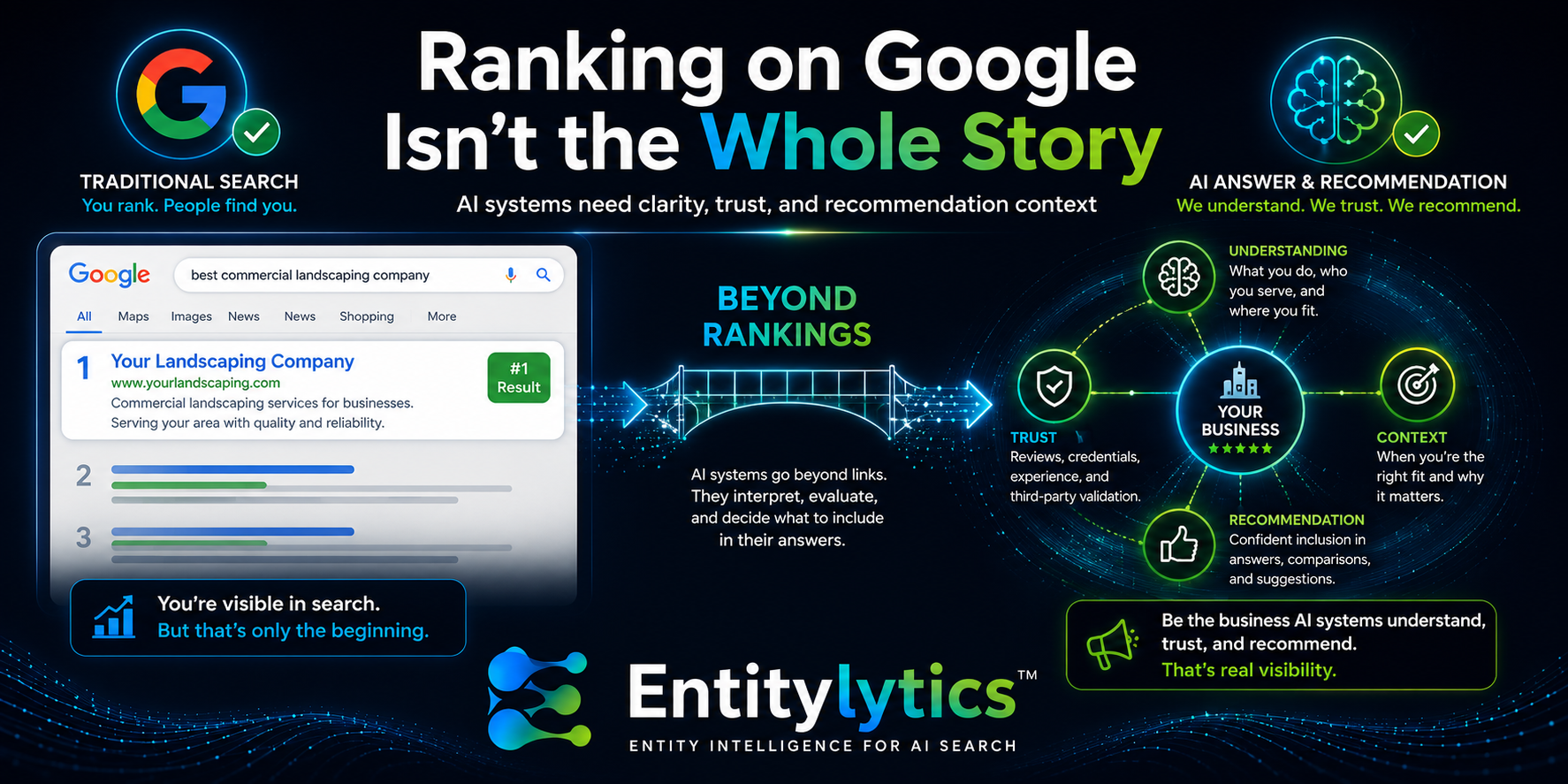
Traditional search visibility usually focuses on where your pages rank and how much traffic they earn. AI search visibility is broader. It includes whether AI systems can identify your brand, describe it correctly, connect it to the right category, cite useful sources, compare it with competitors, and recommend it for relevant customer needs.
For modern businesses, this matters because discovery is no longer limited to search results pages. Buyers, customers, patients, partners, journalists, investors, and internal decision-makers may ask AI systems for recommendations, summaries, explanations, and comparisons before they ever visit a website.
It is about whether AI systems understand your brand clearly enough to explain why it belongs in the answer.
Why AI visibility measurement matters now
Many brands are still measuring visibility through traditional SEO metrics: rankings, impressions, clicks, traffic, backlinks, conversions, and local visibility. Those metrics remain important. But they do not fully explain how a brand appears inside AI-generated answers.
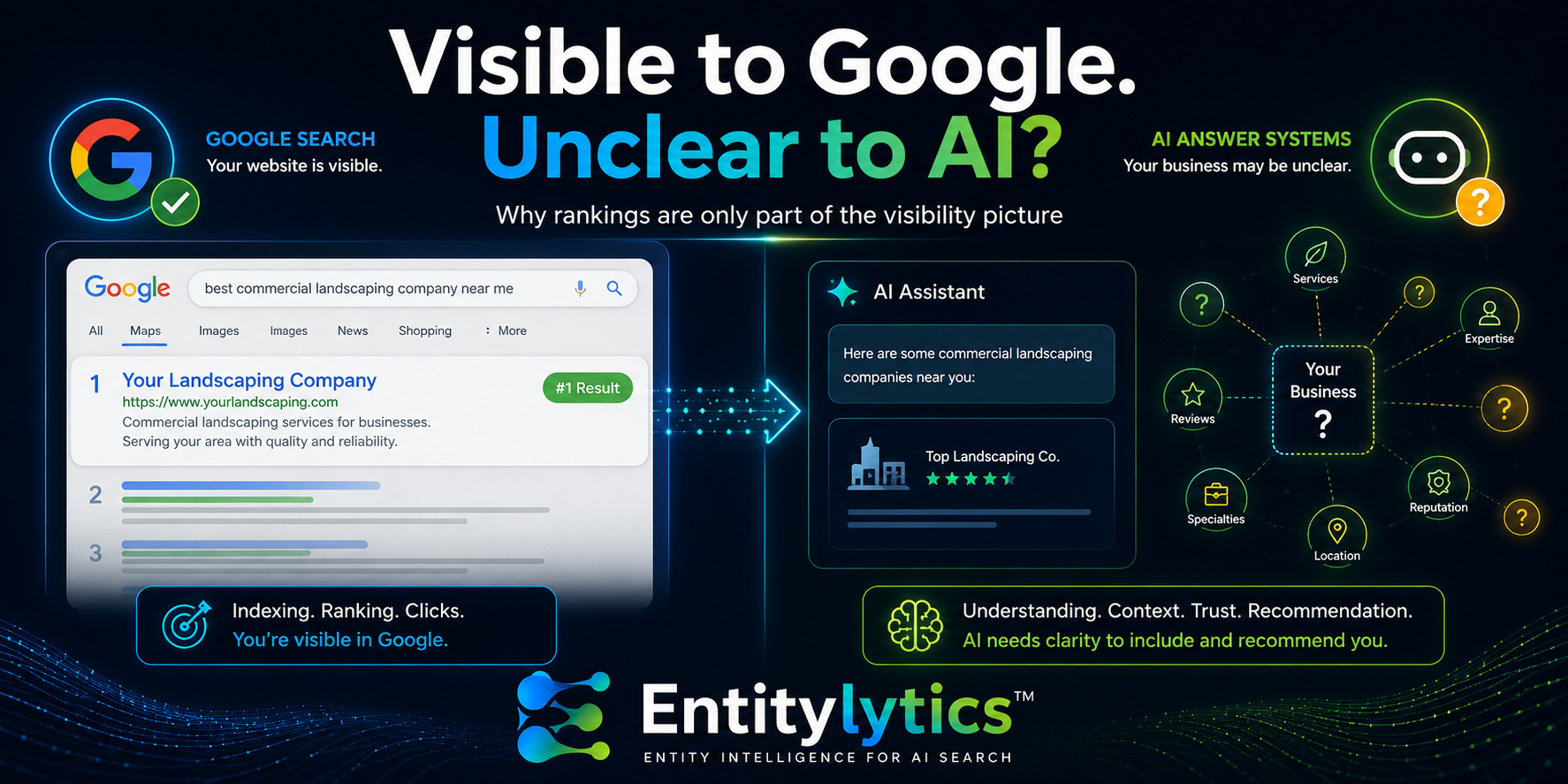
AI systems may mention a brand without sending a click. They may summarize a company without citing its website. They may recommend a competitor because that competitor has clearer evidence. They may misstate what a business does because public information is inconsistent. They may skip a brand entirely because the available evidence does not support the recommendation context.
AI answers compress discovery
Users may see a short summary or recommendation list instead of scanning a full search results page.
Mentions may not become clicks
A brand may influence a decision inside an AI answer even when analytics do not show a direct visit.
Accuracy affects trust
Visibility is less valuable if AI systems describe the brand incorrectly, omit key offerings, or misunderstand the audience.
Evidence gaps create competitive risk
Competitors with clearer trust signals, stronger mentions, and better explanation may be easier for AI systems to recommend.
What brands should measure in AI search
A useful AI visibility audit should look beyond a single score. AI search results can vary across platforms, prompts, wording, locations, and time. The goal is not to pretend there is one perfect number. The goal is to understand the pattern of how AI systems see your brand.
Brand presence
Does your brand appear when users ask relevant AI systems about your category, services, products, use cases, locations, or buyer problems?
Description accuracy
When AI systems describe your brand, are they accurate? Do they understand what you do, who you serve, where you operate, and what makes you relevant?
Category and use-case association
Is your brand connected to the right topics, services, industries, customer types, buying situations, and recommendation scenarios?
Competitive share of answer
How often does your brand appear compared to competitors, and how prominently is it positioned when AI systems provide options?
Citation and source coverage
Which sources does the AI system cite or appear to rely on? Are those sources accurate, current, trusted, and aligned with your brand positioning?
Trust signal visibility
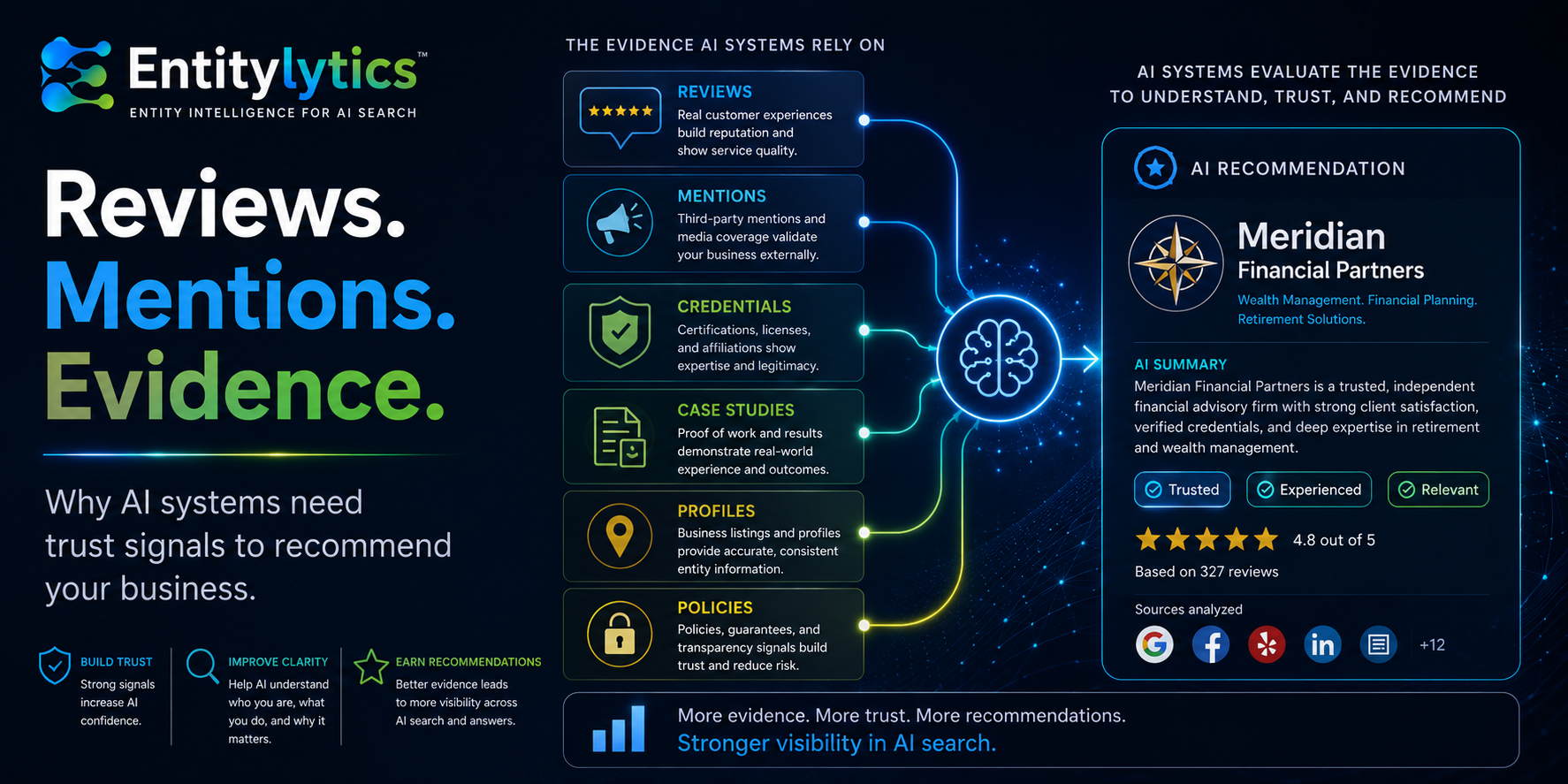
Are reviews, credentials, case studies, awards, policies, third-party mentions, leadership signals, and other proof points visible enough to support trust?
Recommendation readiness
Can AI systems explain when your brand should be recommended, who it is best for, and why it may be a strong choice?
AI search visibility is best evaluated across repeated prompts, multiple platforms, competitor comparisons, and evidence quality.
Need a deeper AI visibility assessment?
Entitylytics™ evaluates how AI systems may identify, understand, trust, associate, and recommend your business based on the public evidence available across your website and digital presence.
The Entitylytics™ full assessment framework
Entitylytics™ approaches AI visibility as a business evidence and recommendation-readiness problem, not just a prompt-tracking problem. A brand may be mentioned in an AI answer and still be misunderstood. It may be cited and still lack trust depth. It may rank in Google and still be unclear to AI systems.
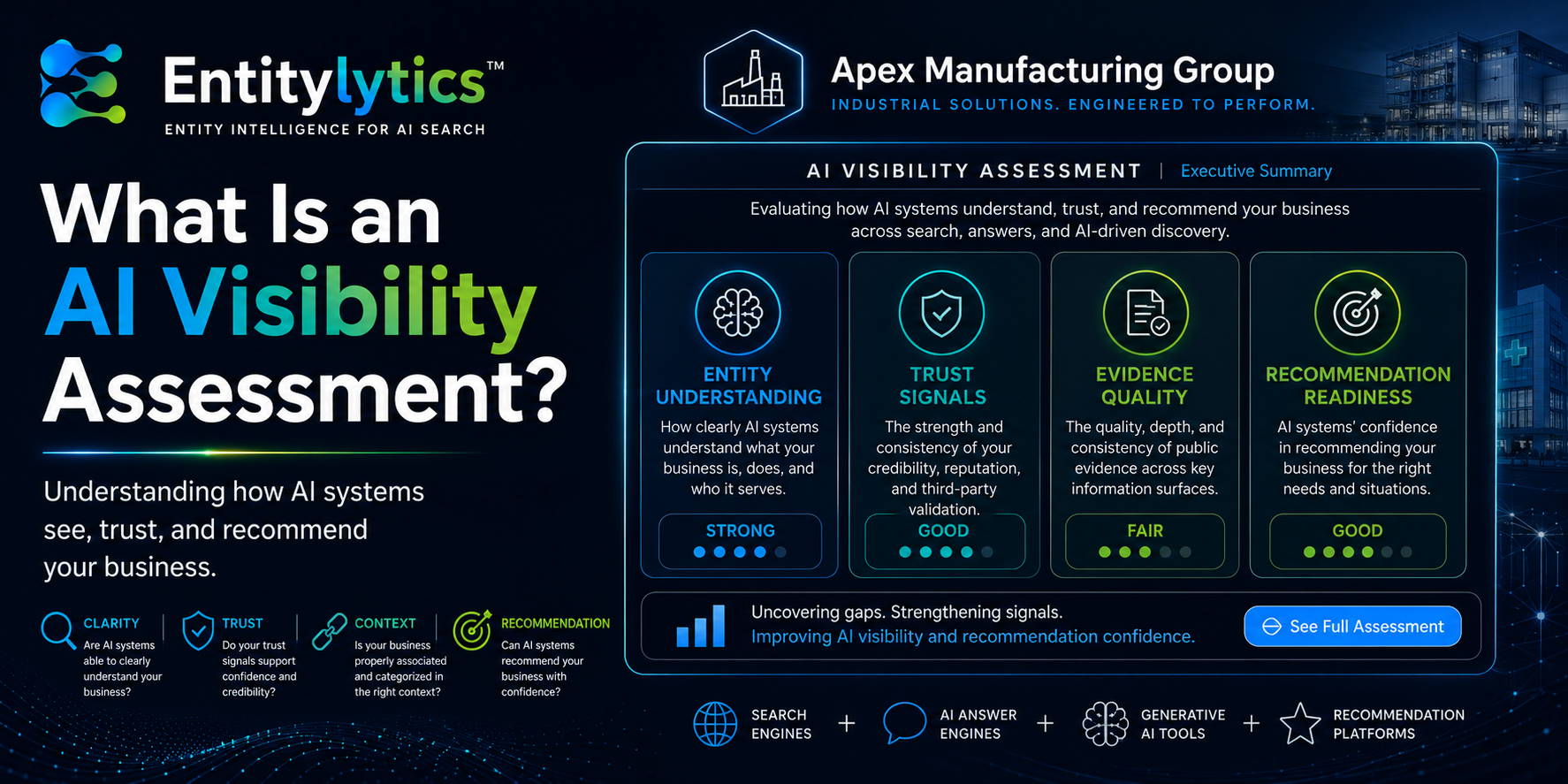
Our full assessment framework evaluates how AI systems may interpret the business entity behind the brand, then identifies the evidence gaps that may limit understanding, trust, and recommendation confidence.
Entity Resolution
Evaluates whether AI systems can uniquely identify the brand, distinguish it from similar entities, and reconcile key identity signals across sources.
Entity Understanding
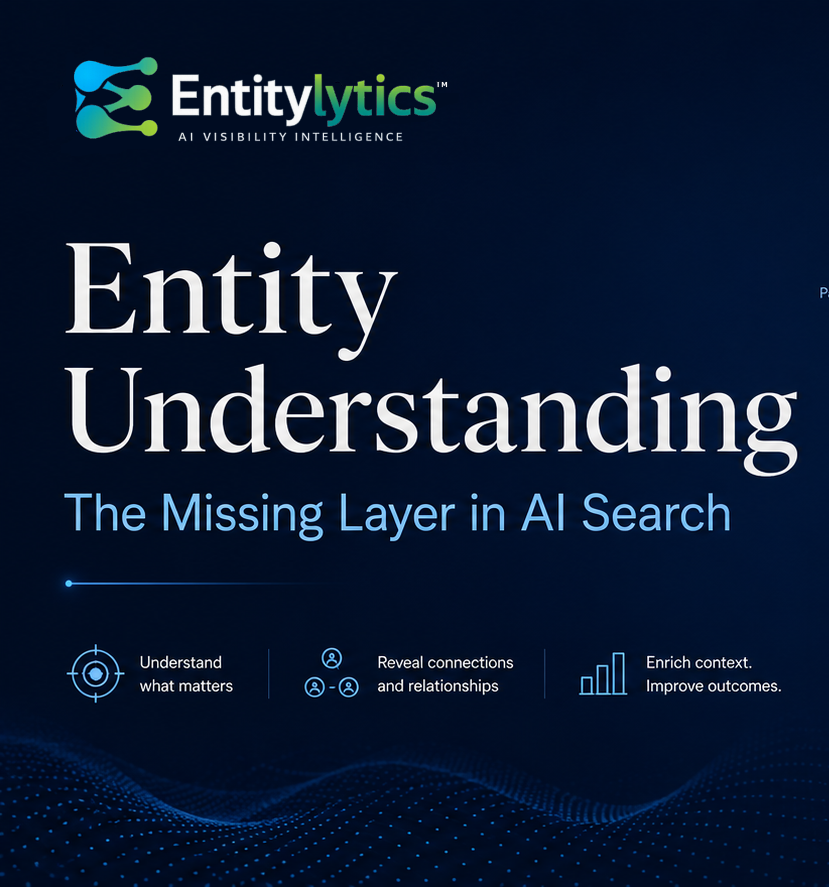
Evaluates whether AI systems can understand what the business does, who it serves, where it operates, and how its offerings fit together.
Trust Signals
Evaluates reviews, credentials, third-party mentions, transparency, reputation evidence, operational proof, and category-appropriate trust signals.
Recommendation Readiness
Evaluates whether enough evidence exists for AI systems to understand when the business should be recommended and why.
The result is not just a list of AI mentions. It is an executive-level view of how the business is positioned for AI search, where evidence is strong, where ambiguity exists, and which improvements should happen first.
How to self-audit your brand’s AI search visibility
A full assessment provides deeper analysis, but businesses can start with a practical self-audit. The key is to move beyond one prompt and one platform.
1. Build a prompt set around real customer questions
Include brand-specific prompts, category prompts, competitor prompts, use-case prompts, local or market prompts, comparison prompts, and recommendation prompts. Avoid testing only your company name.
2. Test across multiple AI systems
Review how your brand appears across systems such as ChatGPT, Gemini, Perplexity, Copilot, Claude, Google AI experiences, and other relevant tools. Different systems may surface different evidence.
3. Record presence, accuracy, and context
Track whether your brand appears, how it is described, whether the description is accurate, whether competitors appear, whether sources are cited, and whether the answer includes recommendation language.
4. Review the sources behind the answer
Identify whether AI systems are relying on your website, third-party profiles, review sites, directories, industry publications, news articles, partner pages, or outdated sources.
5. Compare AI descriptions against your actual positioning
Look for gaps between what AI systems say and what your brand actually wants to be known for. Pay close attention to missing services, wrong categories, outdated descriptions, and weak differentiators.
6. Repeat the audit over time
AI responses can change. Repeated testing helps identify patterns, not just isolated outputs. This is especially important after major website updates, rebrands, launches, PR activity, or content improvements.
How to improve your brand’s visibility in AI search
Improving AI visibility is not about gaming AI systems. It is about making your brand easier to understand, verify, cite, and recommend accurately.
Clarify your brand entity
Make your business name, category, locations, service areas, ownership, leadership, products, services, and target audiences consistent across your website and public profiles.
Create citation-worthy content
Publish clear definitions, practical guides, FAQs, comparison pages, use-case pages, methodology pages, case studies, and original insights that AI systems can understand and cite.
Strengthen trust evidence
Improve reviews, credentials, awards, certifications, team bios, policies, customer proof, case examples, third-party validation, and public reputation signals.
Improve off-site authority signals
Earn accurate mentions from trusted sources, partner pages, directories, industry publications, associations, podcasts, customer stories, and relevant communities.
Connect your evidence internally
Use internal links to connect service pages, product pages, about content, FAQs, reviews, case studies, locations, methodology pages, and trust proof into a coherent evidence layer.
Align content with recommendation scenarios
Explain when your brand is the right fit, who it serves best, which problems it solves, and what evidence supports recommending it over other options.
The clearer the public evidence around your brand, the better chance AI systems have of understanding and representing it accurately.
What not to overvalue when measuring AI visibility
Because AI search is new and evolving, some businesses may be tempted to chase easy-looking shortcuts. The problem is that surface-level measurements can create a false sense of confidence.
Do not rely on one prompt
One answer is not enough to understand AI visibility. Test multiple prompts, use cases, competitors, and platforms.
Do not confuse mention with trust
Being named in an answer is useful, but the quality, accuracy, context, and recommendation strength of the mention matter more.
Do not chase AI tricks
Shortcuts may produce weak or temporary signals. Stronger visibility comes from clearer content, stronger evidence, and credible external validation.
Do not abandon SEO
Technical SEO, crawlability, content quality, structured information, and traditional discoverability still support AI visibility.
The future of AI search visibility is evidence-led
AI search is pushing brands to think beyond rankings. The new visibility challenge is not only whether your website can be found. It is whether AI systems can understand your brand well enough to explain, cite, compare, and recommend it.
That means modern businesses need a more complete visibility framework. Prompt testing is useful, but it is only one part of the picture. Brands also need to evaluate entity clarity, trust signals, source quality, competitive context, recommendation fit, and evidence depth.
Entitylytics™ was built around that broader problem: helping businesses understand how AI systems may identify, understand, trust, and recommend them, then turning that insight into a prioritized path for improvement.
They will be the brands AI systems can understand clearly, verify confidently, and recommend appropriately.
FAQ: Measuring and improving AI search visibility
What does visibility in AI search mean?
AI search visibility means how well your brand is found, described, cited, trusted, and recommended by AI-driven search systems, answer engines, and generative discovery tools.
How do you measure AI search visibility?
Useful measurements include brand presence across prompts, description accuracy, citation sources, competitor share of answer, trust signal visibility, category association, and recommendation readiness.
Is AI visibility the same as SEO?
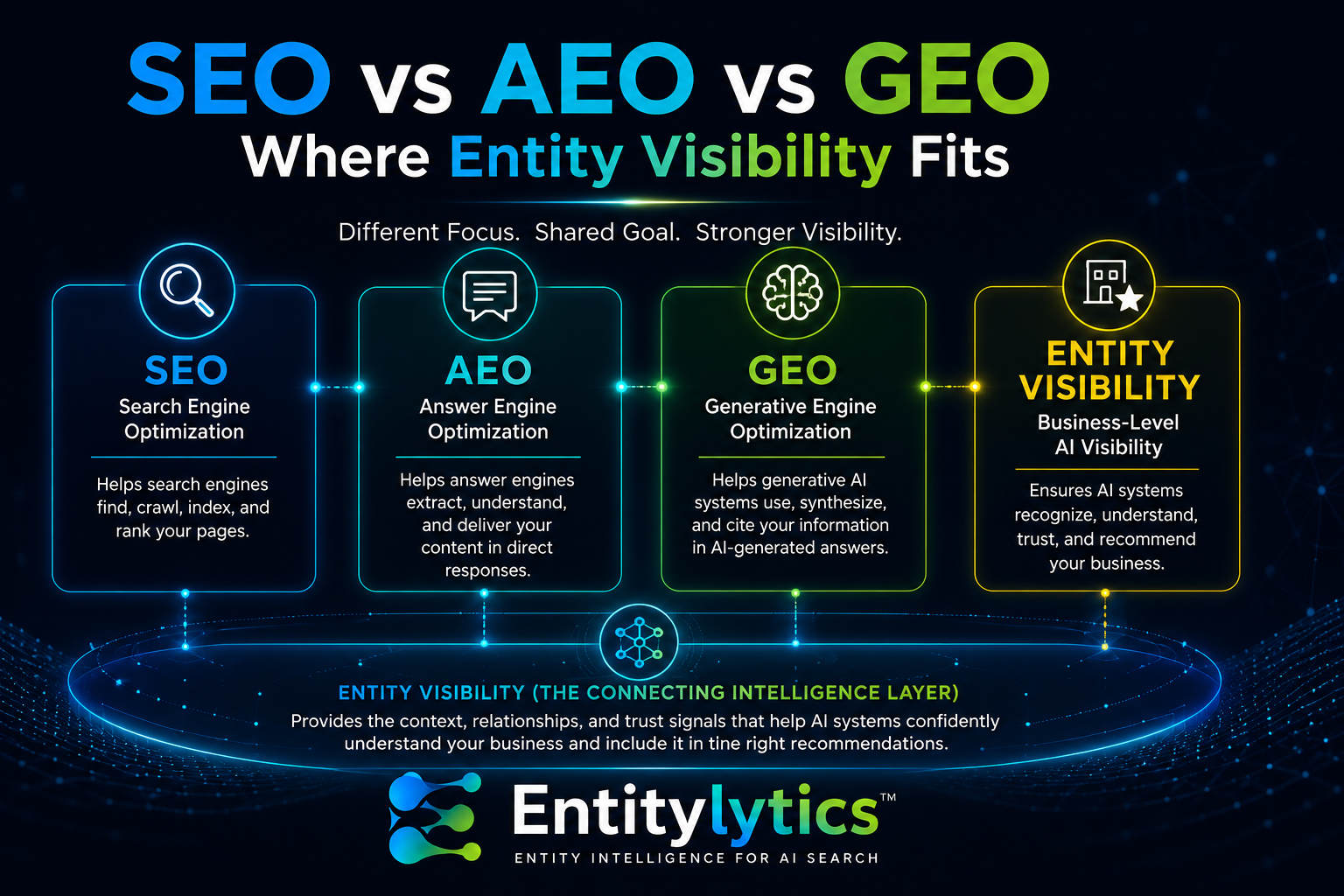
No. SEO helps pages become discoverable and competitive in search. AI visibility also evaluates whether systems understand the brand entity, trust the evidence, and know when the brand should be recommended.
Can a brand improve AI visibility?
Yes. Brands can improve AI visibility by clarifying their identity, strengthening trust evidence, publishing useful and citeable content, earning credible mentions, improving public consistency, and aligning content with recommendation scenarios.
How does Entitylytics assess AI visibility?
Entitylytics™ evaluates entity resolution, entity understanding, trust signals, recommendation readiness, evidence quality, and executive priorities so businesses can identify where AI systems may hesitate and what to improve first.
Measure how AI systems understand your brand
An Entitylytics™ Full Assessment can help identify how clearly AI systems may understand, trust, associate, and recommend your business, and where evidence gaps may be limiting AI search visibility.
Entitylytics™ helps businesses evaluate AI visibility, entity understanding, trust signals, and recommendation readiness.