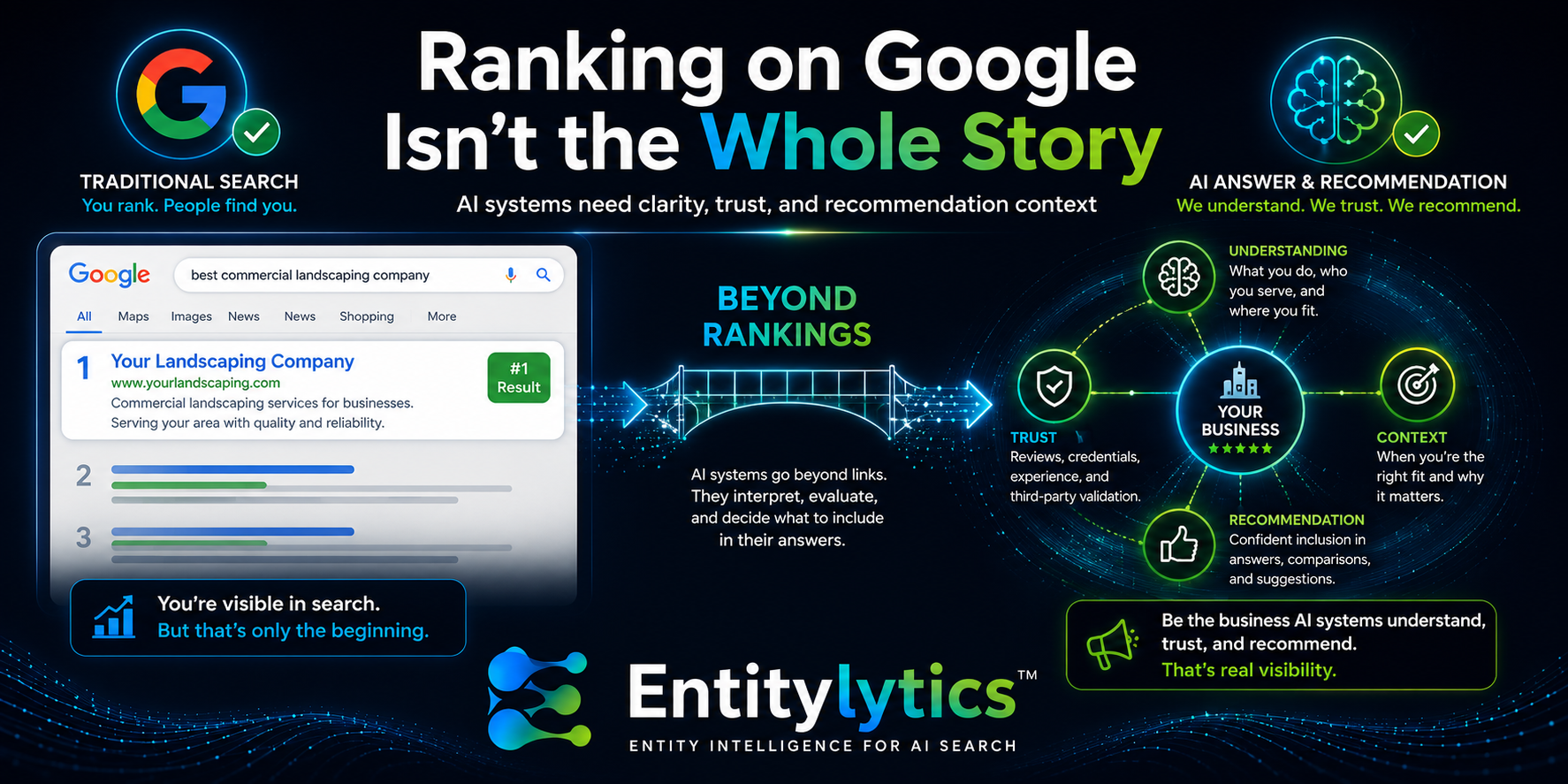
For a long time, ranking on Google has been one of the clearest signals of online visibility. If your business showed up near the top of search results, you had a strong chance of being discovered by potential customers.
That is still true. Search rankings still matter. Organic visibility, local rankings, map placement, paid visibility, and website traffic all remain important parts of a strong digital presence.
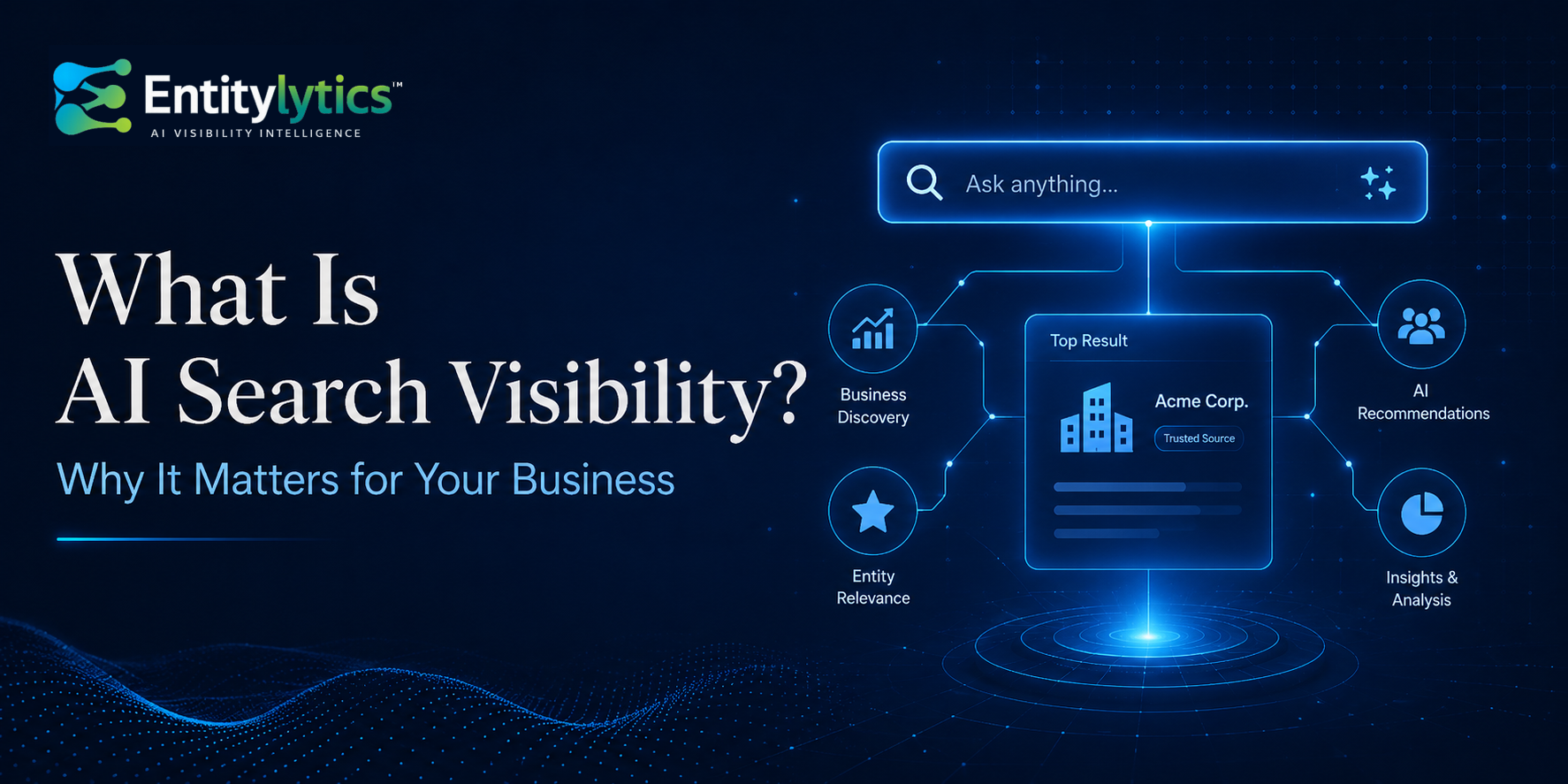
But the way people search is changing. More customers are asking AI systems for recommendations, comparisons, summaries, explanations, and decision support. In those environments, the user may not be scanning ten blue links. They may be reading a generated answer, comparing a short list, or asking a chatbot which provider makes the most sense.
The challenge is that rankings are becoming one layer of visibility, not the entire visibility strategy.
What ranking on Google does not always prove
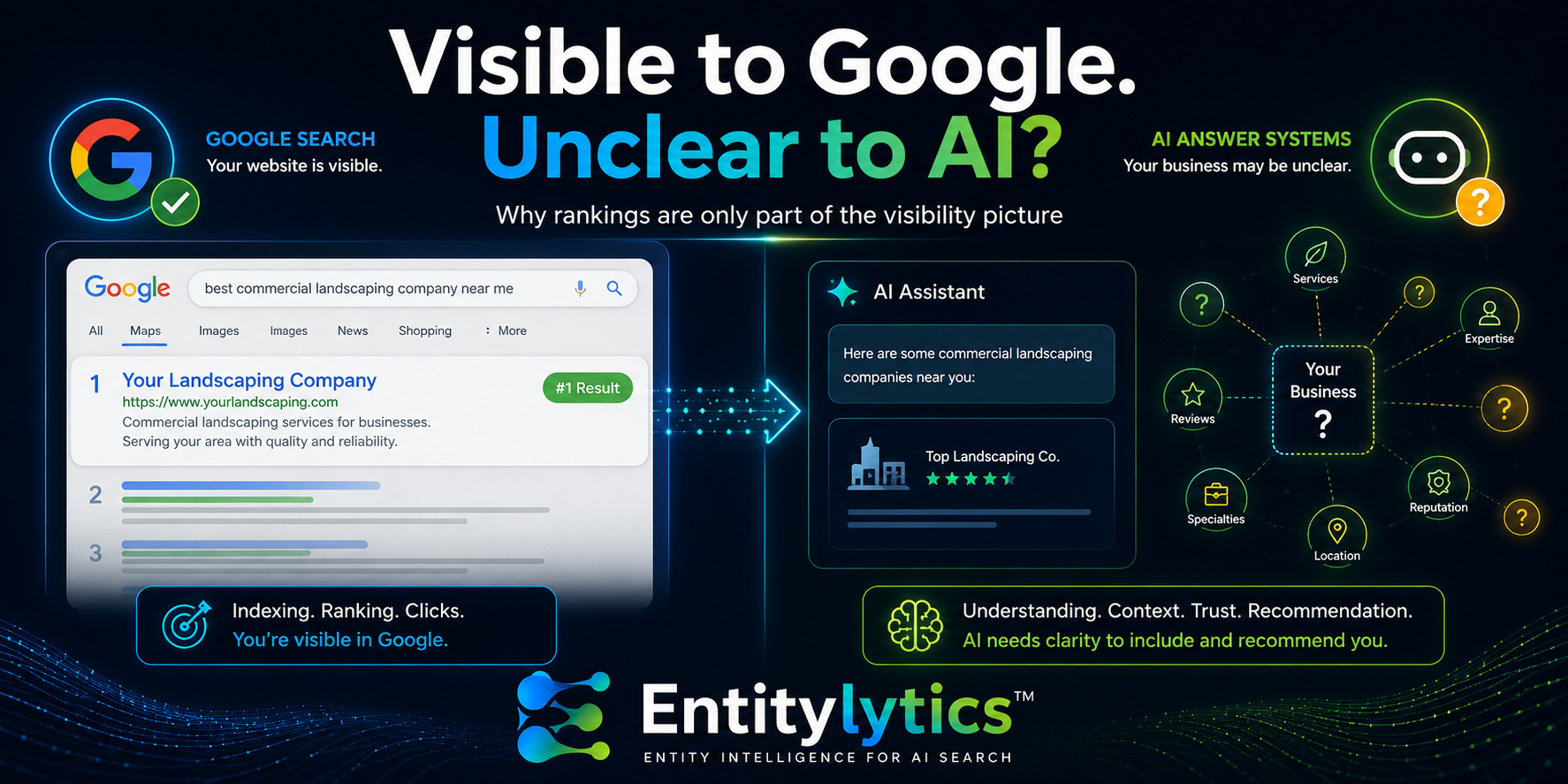
Ranking well can show that a page is relevant, indexable, and competitive for a query. But it does not automatically prove that AI systems fully understand your business, trust your evidence, or know when to recommend you.
It does not always prove entity clarity
A page may rank for a keyword while the business entity behind the page remains vague, inconsistently described, or poorly connected across the web.
It does not always prove trust depth
A ranking page may not provide enough visible evidence of experience, credibility, reviews, credentials, policies, or third-party validation.
It does not always prove recommendation fit
AI may understand that you offer a service but not understand when your business is the best fit for a specific user need.
It does not always prove AI comprehension
Search visibility can exist even when AI systems struggle to summarize your business accurately or connect it to the right scenarios.
In other words, rankings can help you get found, but AI-driven discovery often requires a deeper level of business understanding.
The shift from search results to AI recommendations
Traditional search usually gives users a set of options. AI search often tries to narrow, interpret, and explain those options. That difference changes what businesses need to optimize for.
In a traditional search journey, the user may type a query, compare several links, visit a few websites, read reviews, and make a decision. In an AI-assisted journey, the user may ask a more detailed question and expect the system to do part of that interpretation for them.
Traditional ranking asks:
- Can this page appear for the query?
- Can the searcher find and click it?
- Does the page match search intent?
- Is the page competitive in results?
- Does it generate traffic?
AI recommendation asks:
- What business is behind this page?
- Can the business be trusted?
- Who is the business right for?
- What evidence supports recommending it?
- When should it be included in the answer?
This does not eliminate SEO. It expands it. Businesses now need to think about how their websites, public profiles, reviews, structured information, and trust signals work together as evidence.
Is your business visible beyond rankings?
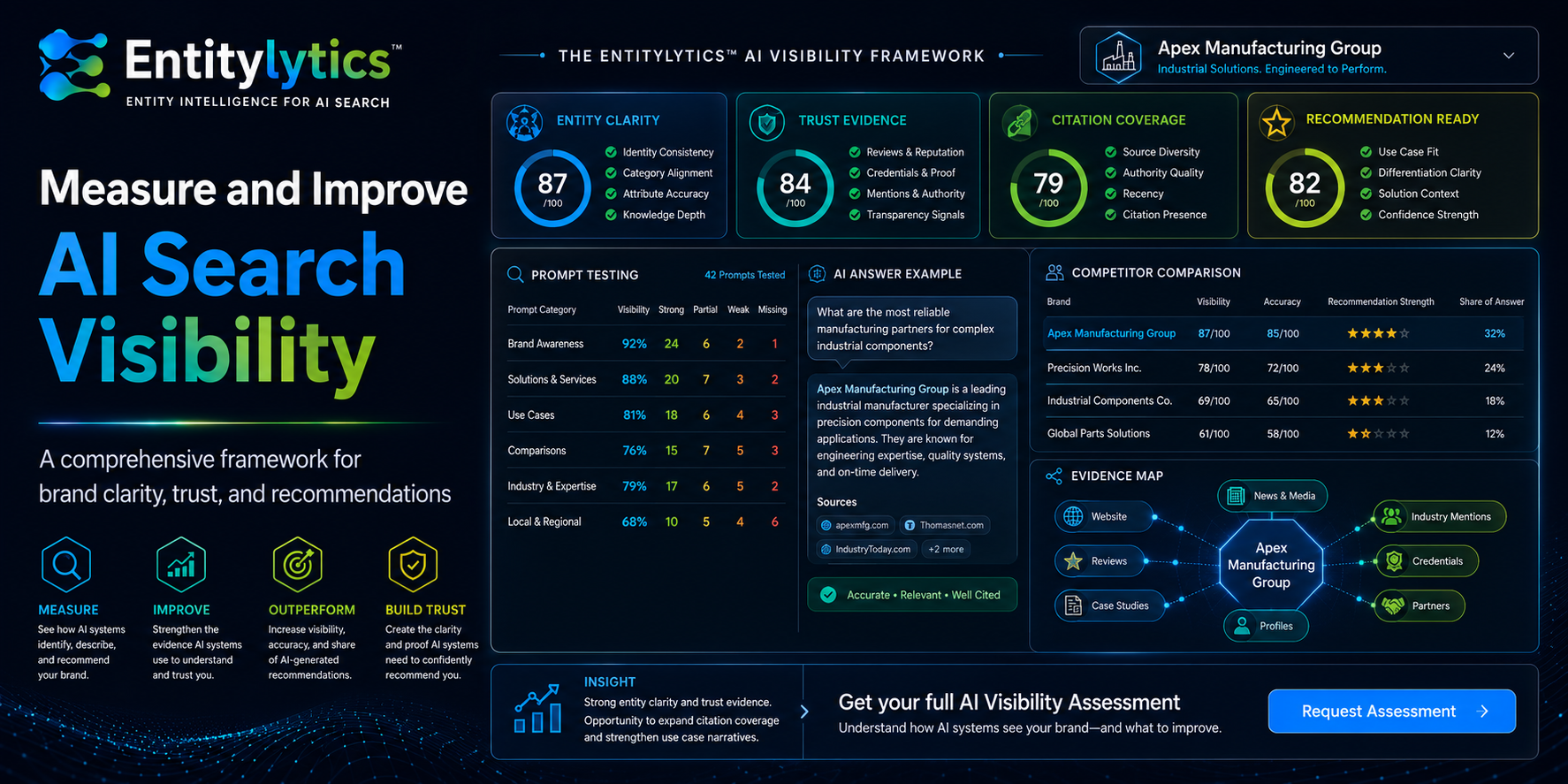
Entitylytics™ evaluates how AI systems may understand, trust, associate, and recommend your business based on the evidence available across your website and public digital presence.
The new layers of business visibility
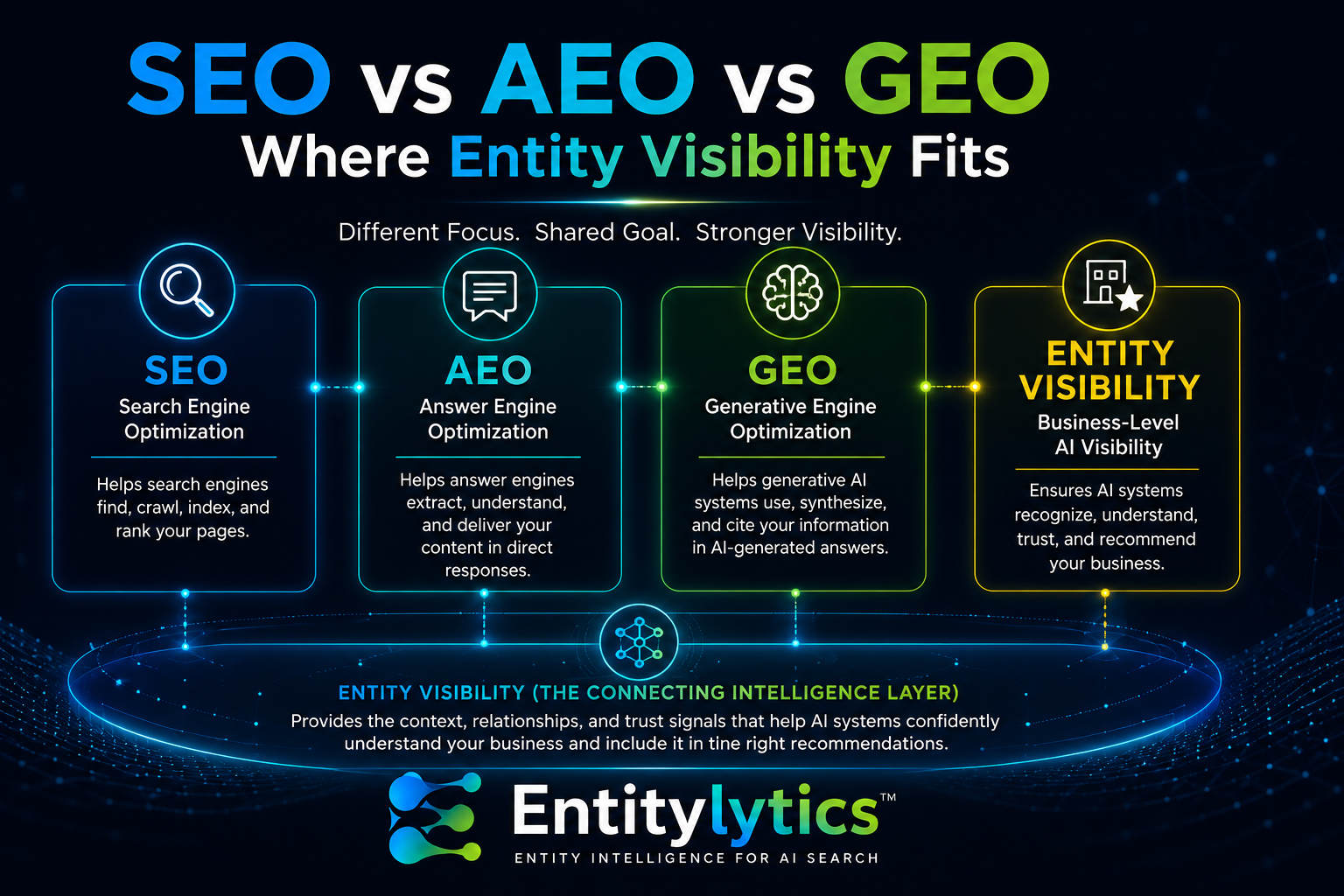
Modern visibility is becoming more layered. A business may need to be findable in search, understandable to AI systems, trustworthy enough to recommend, and clear enough to fit specific customer scenarios.
Search visibility
Your pages need to be discoverable, crawlable, indexable, and relevant for the searches that matter to your audience.
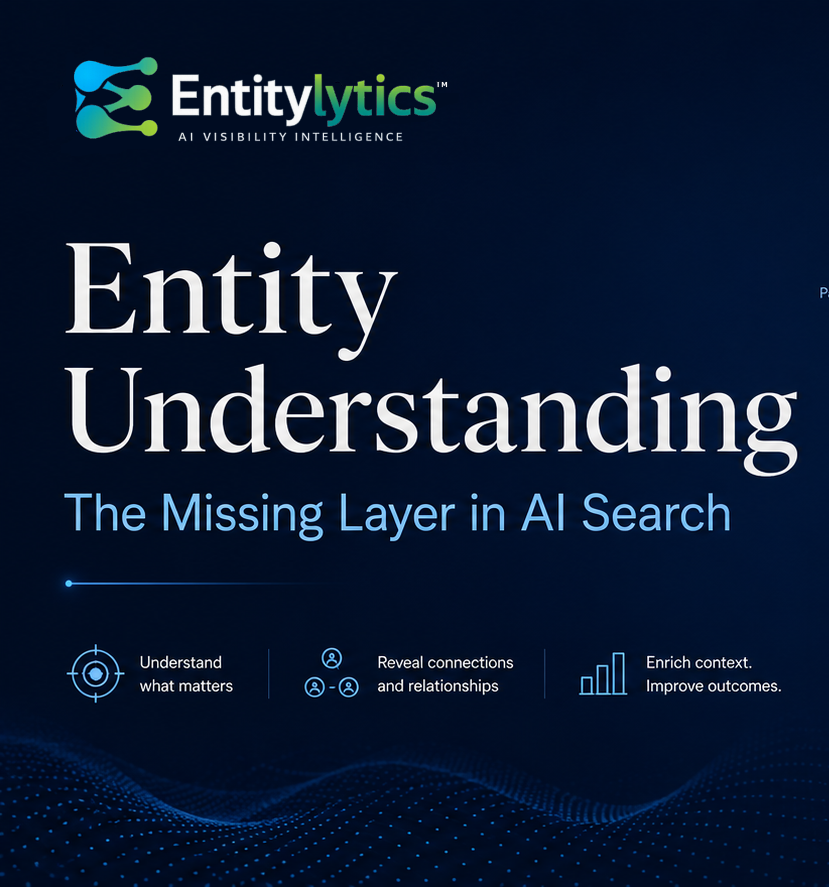
Entity understanding
AI systems need to understand what your business is, what it does, who it serves, and how its services, locations, and evidence connect.
Trust signal strength
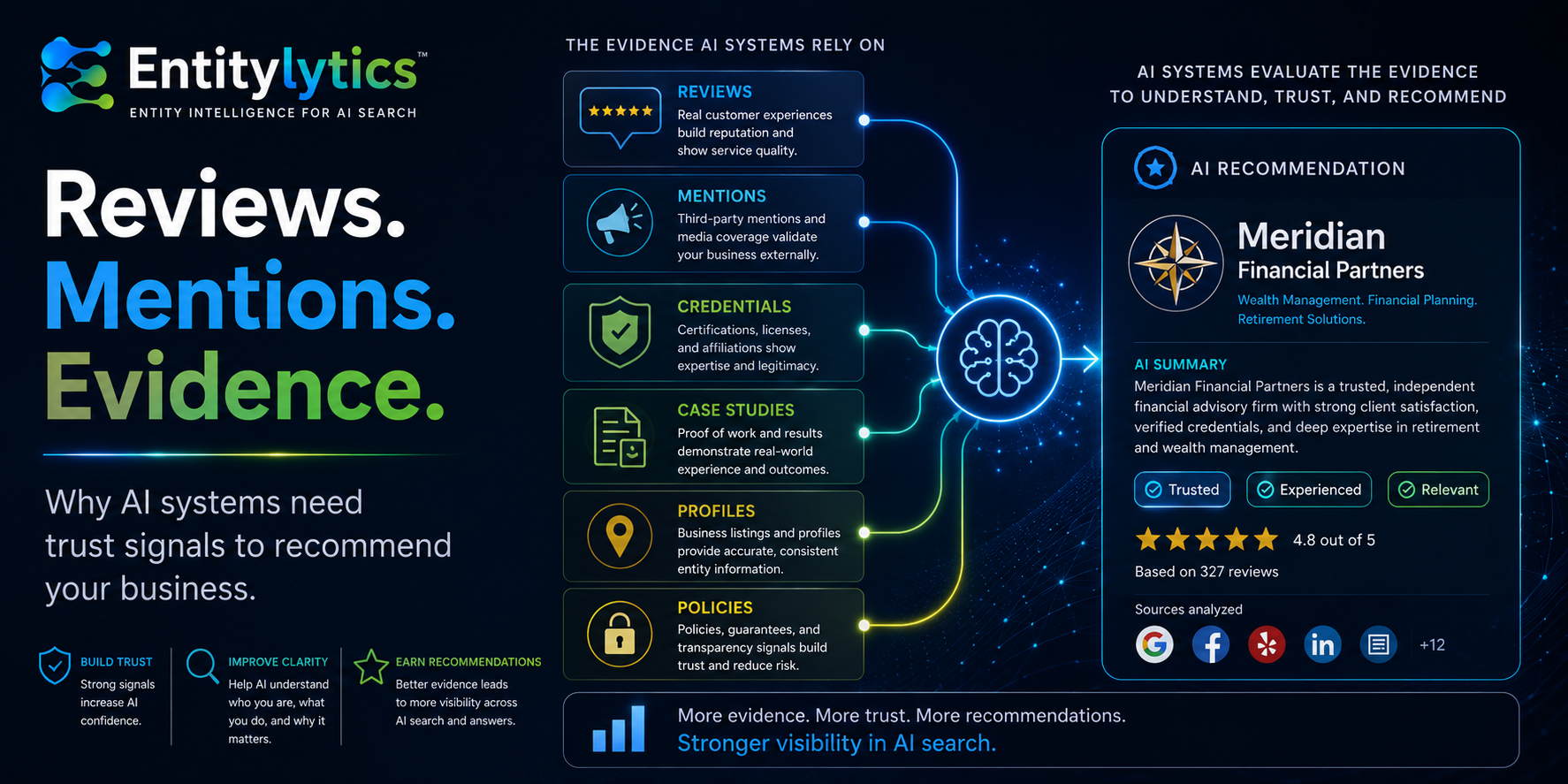
Reviews, experience, credentials, policies, third-party mentions, case examples, and consistent public information help support confidence.
Recommendation readiness
AI systems need to understand when your business is the right fit, what makes it relevant, and why it should be included in an answer.
Evidence consistency
Your website, profiles, reviews, listings, content, and business descriptions should reinforce the same identity and positioning.
Entity clarity, trust evidence, and recommendation context help AI systems decide whether your business belongs in the answer.
The business risk of relying only on rankings
A rankings-only mindset can create blind spots. A business may feel secure because it appears in Google, while AI systems may still misunderstand it, omit it, or recommend competitors with clearer evidence.
You may be visible but not chosen
Ranking can get you seen, but AI systems may still favor competitors that are easier to summarize, verify, and recommend.
You may be misrepresented
If your business information is thin or inconsistent, AI may describe your services, audience, or location incorrectly.
Your strengths may be missed
Experience, credentials, reviews, or unique differentiators may not influence AI responses if they are not visible and connected.
Your competitors may become clearer
A competitor with better entity clarity and trust evidence may become easier for AI systems to include in recommendations.
The risk is not that rankings become worthless. The risk is assuming rankings are enough when customer discovery is moving into answer engines, AI assistants, and recommendation-driven experiences.
What businesses should do now
Businesses do not need to abandon SEO. They need to build on it. The goal is to keep the benefits of search visibility while strengthening the evidence AI systems use to understand and recommend the business.
Keep investing in strong SEO fundamentals
Technical SEO, crawlability, page structure, content quality, internal links, and local visibility still matter. AI visibility is strongest when the foundational website is healthy.
Make your business identity unmistakable
Clearly communicate your name, category, location, service area, primary offerings, audience, experience, and positioning across your website and public profiles.
Explain your services in real-world context
Do not rely only on keywords. Explain who each service helps, when it is needed, what problem it solves, what process is involved, and what makes your business qualified.
Strengthen visible trust signals
Reviews, testimonials, credentials, team background, project examples, policies, guarantees, case studies, and third-party mentions should be easy to find and understand.
Connect your evidence across the site
Internal links should connect service pages, location pages, FAQs, reviews, about information, case examples, and educational content so the business story is reinforced.
Evaluate how AI systems understand you
AI-generated summaries, recommendations, and answers can reveal gaps that traditional ranking reports may not show. Look for confusion, omissions, weak trust signals, or unclear recommendation fit.
The future of visibility is bigger than rankings
Ranking on Google remains important, but it is no longer the only way customers encounter information. AI systems are becoming a discovery layer, a comparison layer, and in some cases, a recommendation layer.
Businesses that adapt will not be the ones that abandon SEO. They will be the ones that expand SEO into a broader visibility strategy built around clarity, trust, evidence, and recommendation readiness.
It is, “Can AI systems understand our business well enough to recommend us when it matters?”
FAQ: Google rankings and AI visibility
Does ranking on Google still matter?
Yes. Google rankings still matter for visibility, traffic, and discovery. The point is not that rankings are no longer valuable. The point is that rankings are now part of a broader visibility picture that includes AI understanding and recommendation readiness.
Can a business rank well but still be weak in AI search?
Yes. A business may rank for certain searches while still lacking the entity clarity, trust evidence, public consistency, or recommendation context AI systems need.
Is AI visibility the same as SEO?
No. SEO helps pages become discoverable and competitive in search. AI visibility also considers whether systems can understand the business, trust the evidence, and recommend it in the right context.
What makes a business easier for AI to recommend?
Clear service information, consistent business identity, strong reviews, visible credentials, useful FAQs, project examples, third-party validation, and well-connected website content can all help.
How does Entitylytics help?
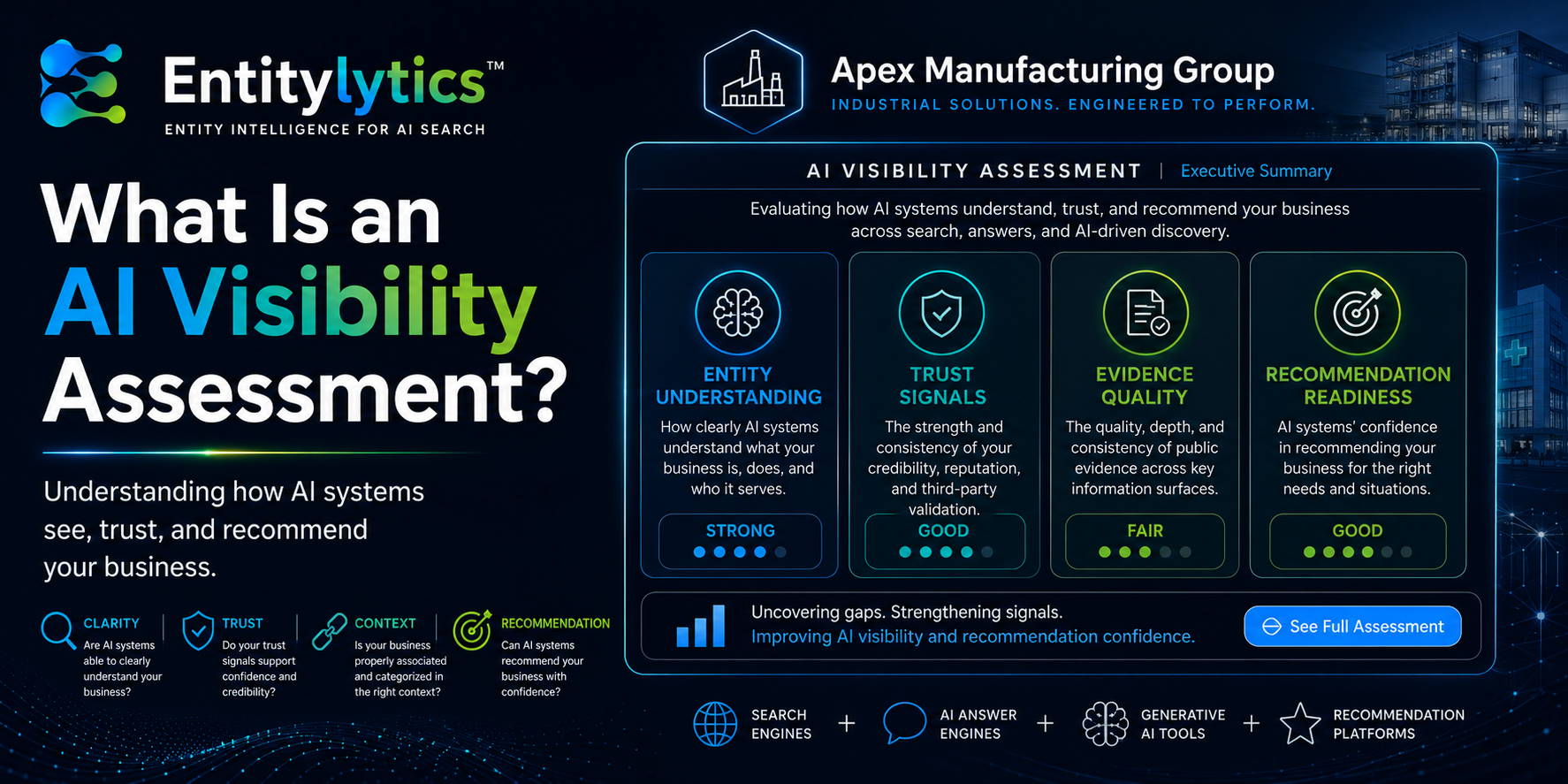
Entitylytics™ evaluates how AI systems may understand, trust, associate, and recommend a business. The assessment identifies clarity gaps, evidence weaknesses, trust limitations, and opportunities to improve AI visibility.
Find out whether your visibility goes beyond rankings
An Entitylytics™ Assessment can help identify where your business is visible, where AI systems may hesitate, and what evidence gaps may limit recommendation confidence.
Entitylytics™ helps businesses evaluate AI visibility, entity understanding, trust signals, and recommendation readiness.