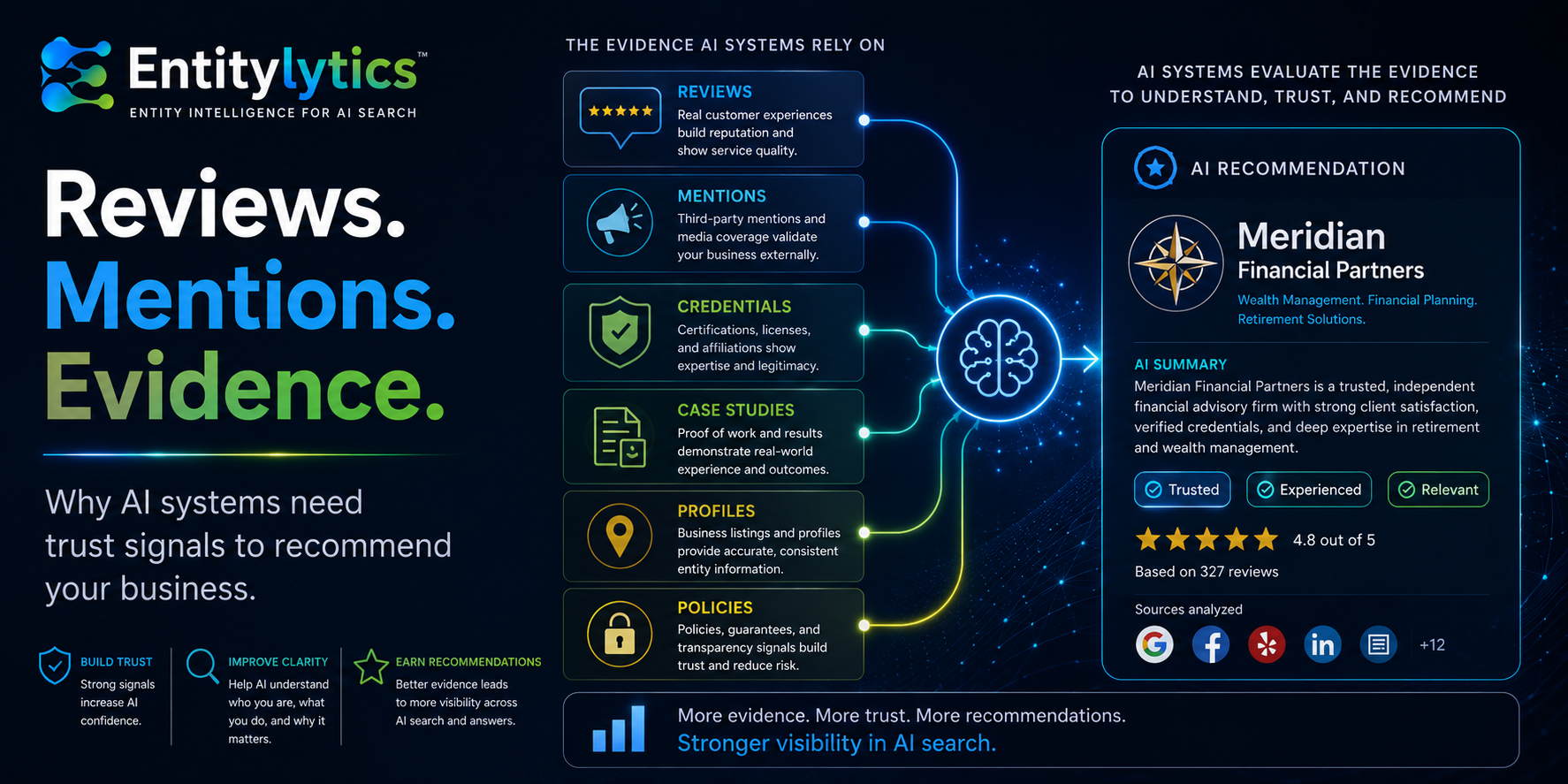
In traditional search, businesses often focused on ranking signals: keywords, links, page relevance, technical SEO, and local visibility. Those still matter. But AI search adds another layer: evidence quality.
When a customer asks an AI system for a trusted provider, a recommended company, a reliable supplier, or the best option for a specific need, the system has to do more than find a web page. It has to interpret whether the business appears credible enough, relevant enough, and clear enough to include in the response.
That is why reviews, third-party mentions, credentials, public business details, case examples, policies, and other evidence signals are becoming more important. They help AI systems connect the business to real-world trust.
The clearer and stronger your business evidence is, the easier it becomes for AI systems to understand why your business may deserve to be included, trusted, or recommended.
Reviews help AI systems understand public reputation
Reviews are one of the most visible trust signals around a business. They can help show whether customers have real experience with the company, what those customers value, and how consistently the business delivers.
For AI systems, reviews may help reinforce reputation, service quality, customer sentiment, geographic relevance, product satisfaction, and use-case fit. They are not the only trust signal, but they are often one of the most accessible.
Customer experience
Reviews can reveal what customers repeatedly praise, such as reliability, responsiveness, expertise, product quality, or service outcomes.
Category relevance
Review language can reinforce what the business is known for and which services, products, or locations customers associate with it.
Local or market confidence
For local and multi-location companies, reviews can support evidence that the business serves a specific market or customer base.
Pattern recognition
Consistent themes across reviews may help strengthen confidence more than isolated claims made only by the business itself.
The strongest review profiles are not only large in number. They are specific, recent enough to feel active, relevant to the business category, and consistent with the rest of the company’s public evidence.
Mentions help validate that your business exists beyond your own website
A business website is important, but AI systems may also look for supporting signals beyond the company’s own claims. Mentions across the web can help validate that the business is recognized by other sources.
Mentions may include directory listings, industry profiles, news references, partner pages, vendor directories, award pages, sponsorships, podcasts, interviews, trade publications, association listings, local business features, or other public references.
Owned evidence includes:
- Your website pages
- Your about page
- Your service and product content
- Your FAQs and case studies
- Your published company claims
External mentions include:
- Industry directories and profiles
- Partner or supplier references
- News, media, and trade mentions
- Association or certification listings
- Third-party review and business platforms
External mentions do not need to be flashy to be useful. Even practical, accurate references can help reinforce who the business is, what category it belongs to, where it operates, and why it may be credible.
Are your trust signals clear enough for AI search?
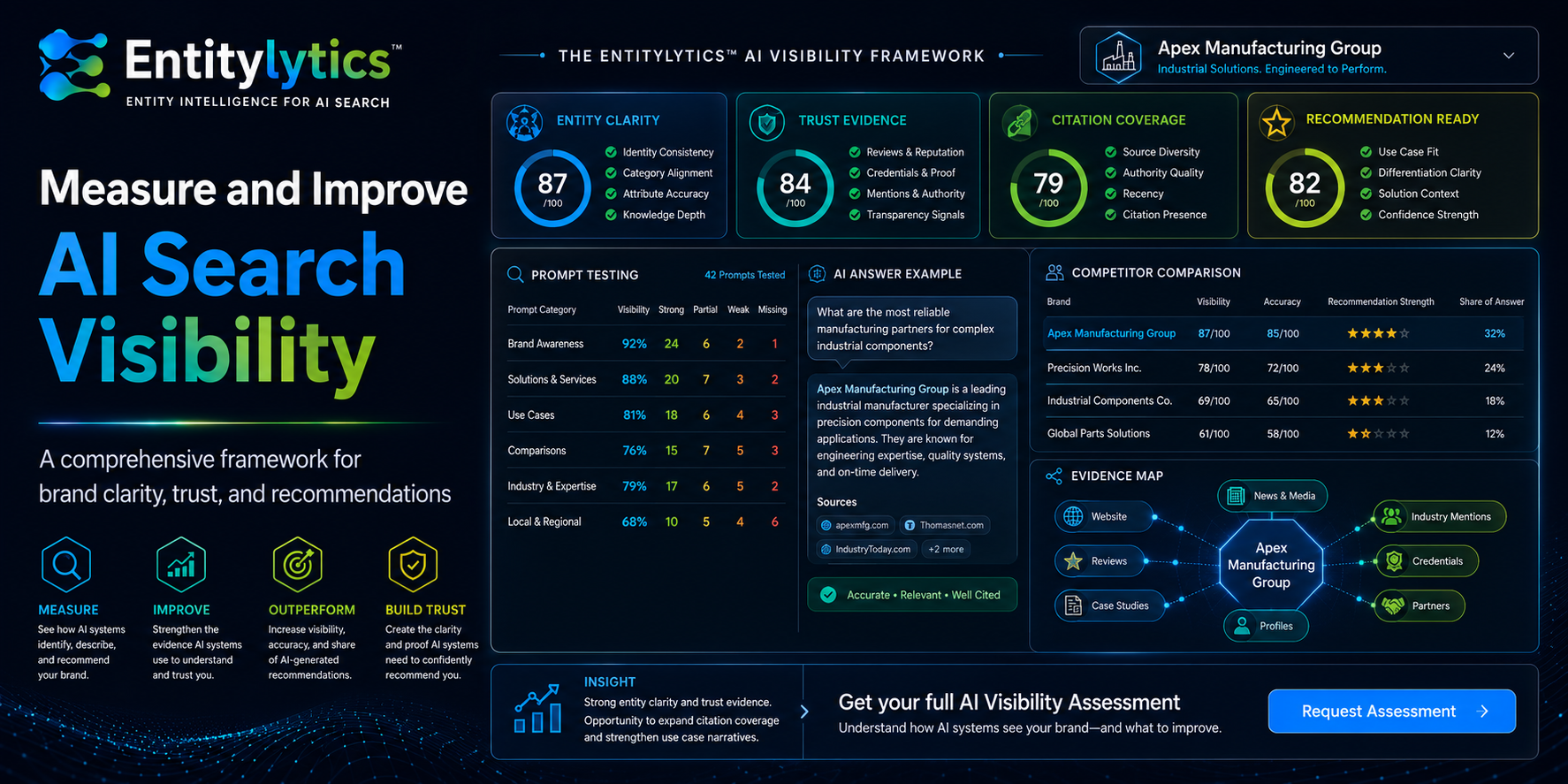
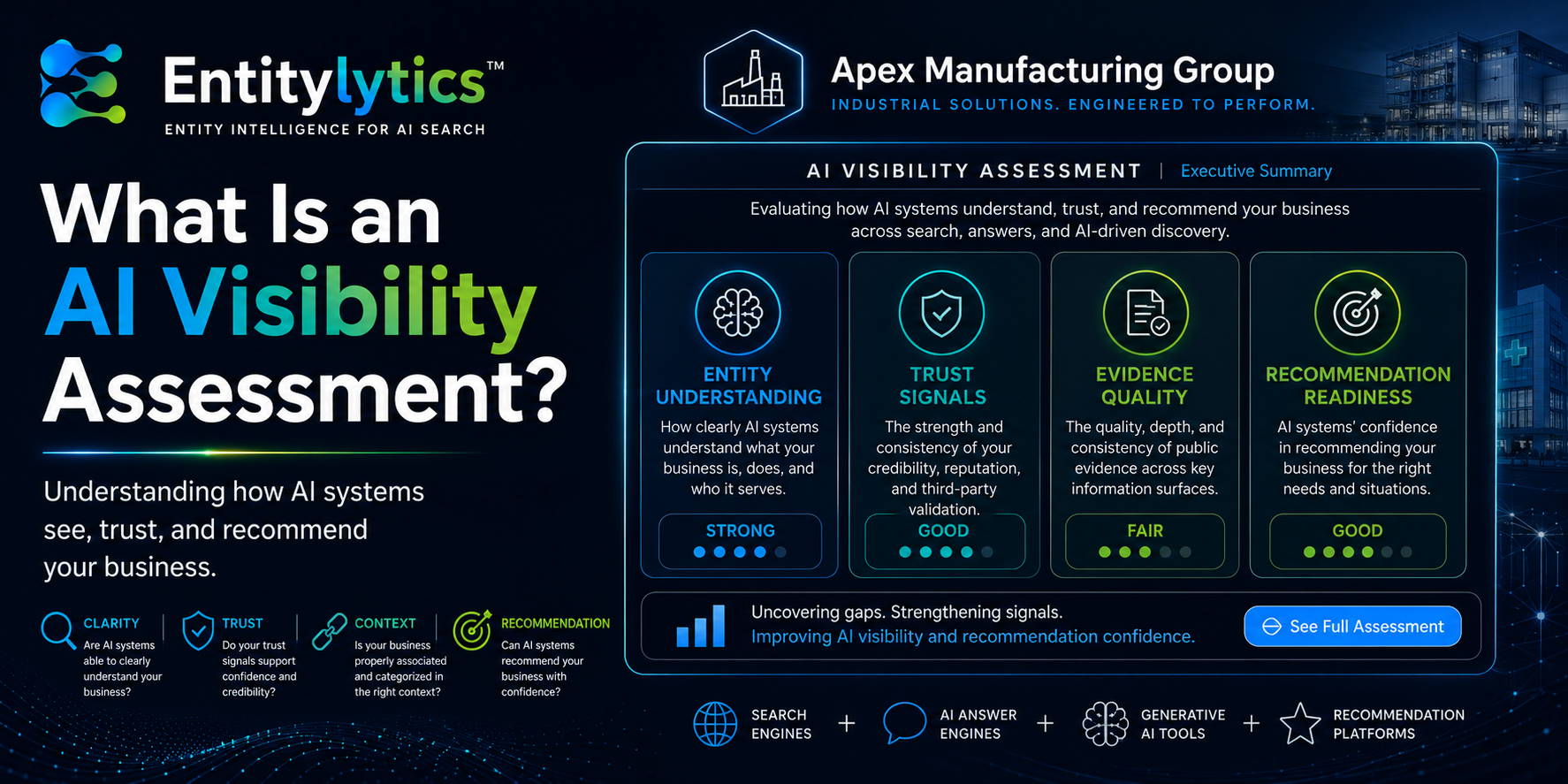
Entitylytics™ evaluates how AI systems may understand, trust, associate, and recommend your business based on the evidence available across your website and public digital presence.
Business evidence gives AI systems something to work with
Business evidence is the broader collection of public proof that helps AI systems understand whether a company is legitimate, qualified, active, relevant, and trustworthy.
This evidence can come from your website, business profiles, third-party sources, customer feedback, structured information, and public relationships around the company.
Identity evidence
Business name, category, address, service area, locations, leadership, brand consistency, and clear company descriptions.
Expertise evidence
Team background, certifications, credentials, years of experience, specializations, industry knowledge, and technical qualifications.
Reputation evidence
Reviews, testimonials, ratings, customer stories, references, case examples, and repeat patterns in customer feedback.
Operational evidence
Policies, service areas, contact information, support information, warranties, guarantees, appointment options, and fulfillment details.
Third-party evidence
Mentions, memberships, directory listings, partner pages, supplier references, awards, associations, and media coverage.
Recommendation evidence
Clear use cases, customer fit, service scenarios, product applications, differentiators, and proof that supports when the business is a strong choice.
Why this matters more in AI search than traditional rankings alone
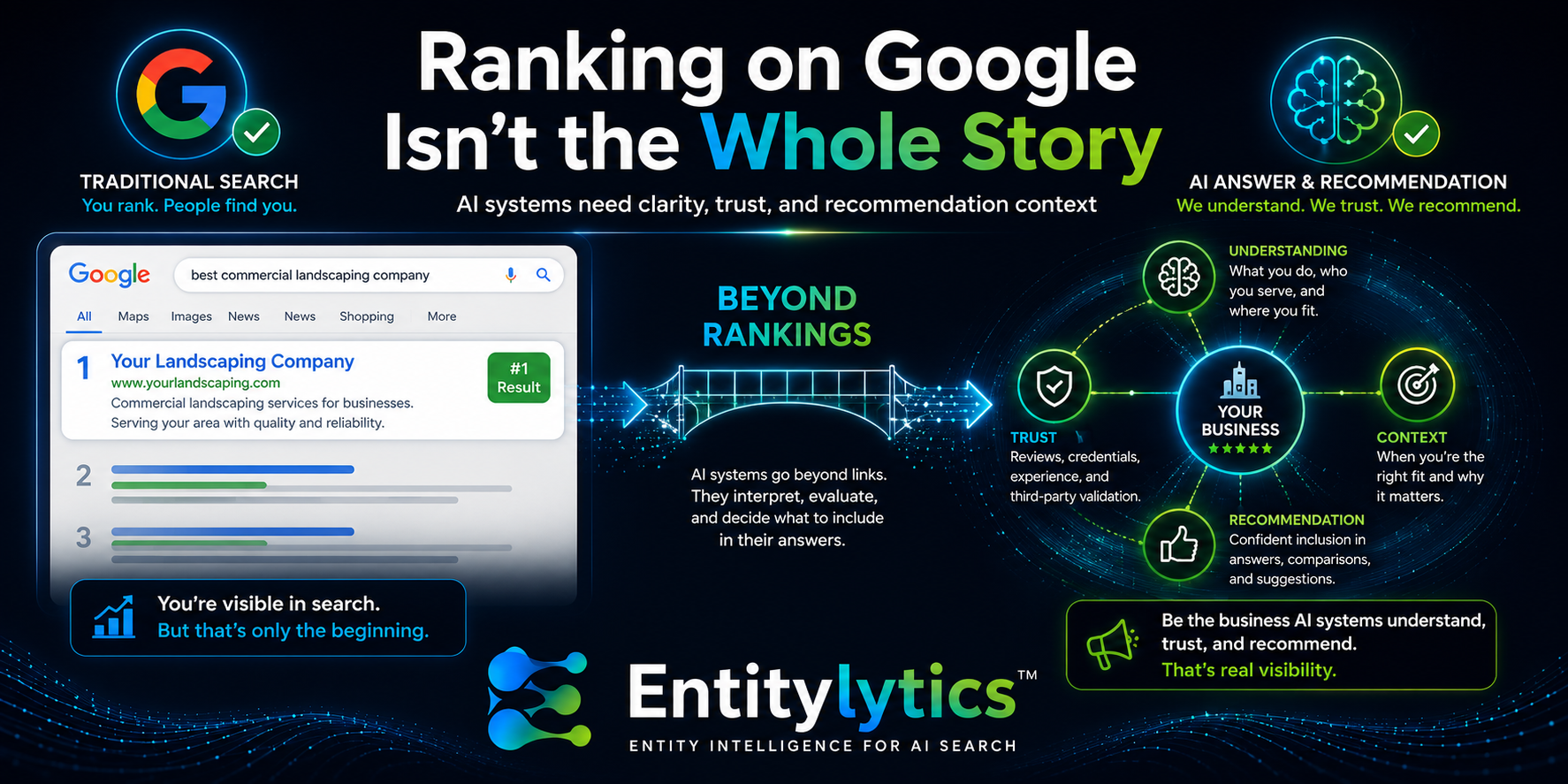
Traditional rankings can help a business get discovered. AI search may go further by interpreting which businesses should be summarized, compared, or recommended. That makes evidence more important because the system needs support for the answer it generates.
Traditional SEO often rewards:
- Crawlable pages
- Keyword relevance
- Content quality
- Links and authority
- Technical performance
AI search also needs:
- Entity clarity
- Trust evidence
- Consistent public signals
- Recommendation context
- Support for why the business fits
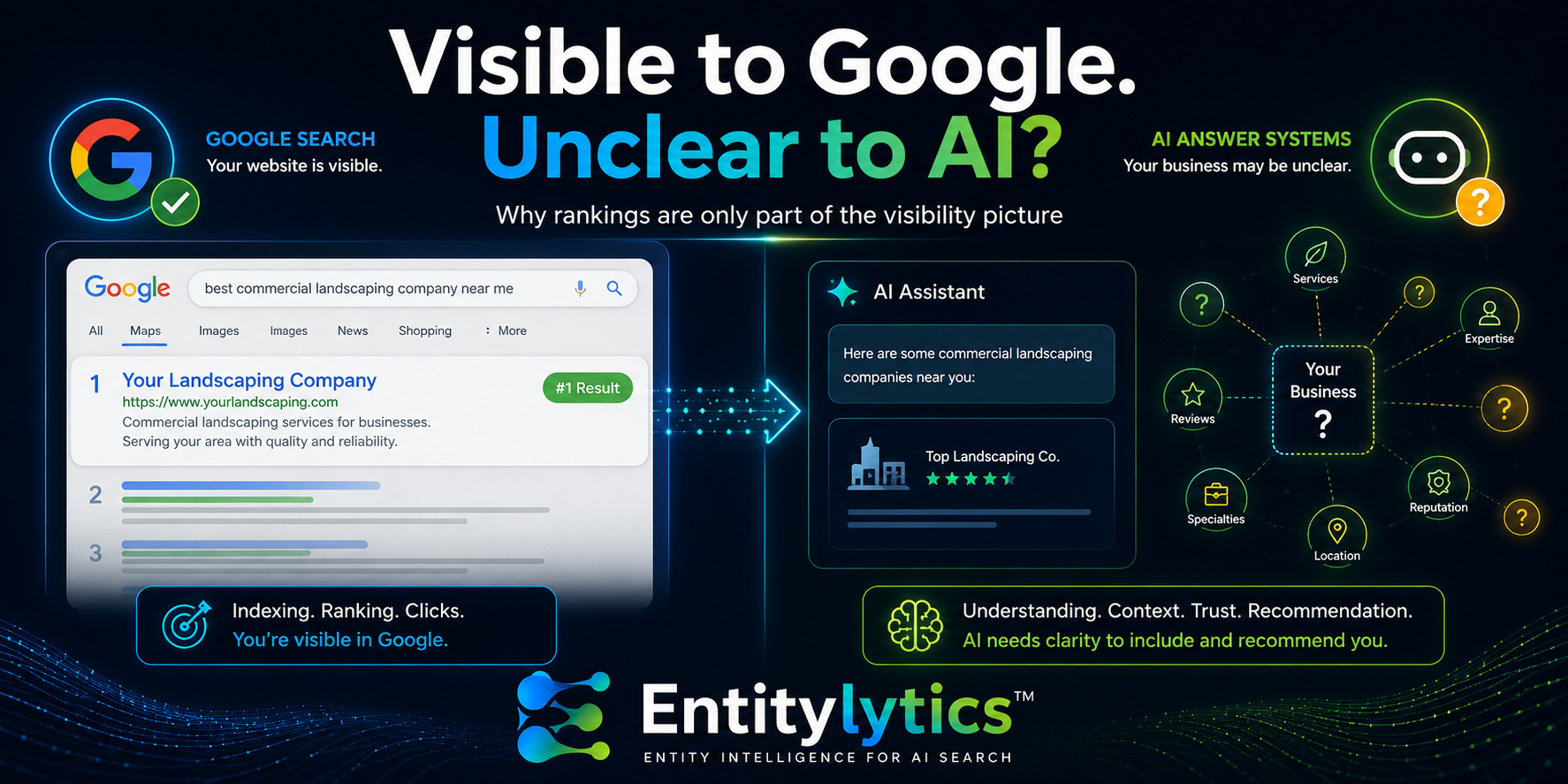
A business may be visible in search results but still lack the supporting evidence AI systems need to include it confidently in a recommendation. This is especially important when users ask high-intent questions such as who to hire, which provider to trust, which company is best for a use case, or which solution fits a specific need.
Reviews, mentions, and business evidence help provide the reasons a company may be trusted, understood, and recommended.
Common evidence gaps that weaken AI visibility
Many businesses have strong real-world credibility but weak public evidence. The company may be experienced, trusted by customers, and highly capable, yet still difficult for AI systems to evaluate with confidence.
Reviews are thin or generic
Reviews may exist but fail to mention specific services, products, locations, outcomes, or customer needs.
Mentions are inconsistent
Third-party references may use different names, outdated descriptions, old addresses, or mismatched categories.
Trust proof is hidden
Credentials, experience, team information, policies, or case examples may exist but be hard to find or poorly connected.
Evidence is not connected
Service pages, reviews, FAQs, case studies, locations, and about information may not reinforce the same business story.
Differentiators are unclear
AI may understand what the business offers but not why it is a strong choice for a specific customer or use case.
Public profiles are incomplete
Major profiles may be missing useful categories, descriptions, links, services, photos, or accurate business details.
How businesses can strengthen AI-readable evidence
Improving AI visibility does not mean chasing shortcuts. It means making your real-world credibility easier to find, verify, connect, and understand.
Encourage specific, authentic reviews
Do not ask for fake or scripted reviews. Instead, encourage real customers to describe what they hired you for, what problem you solved, what location or team they worked with, and what outcome they experienced.
Make credentials and trust proof visible
Certifications, licenses, awards, affiliations, warranties, guarantees, policies, team experience, and industry background should be visible and easy to understand.
Build accurate third-party references
Keep business profiles, directories, partner pages, association listings, and supplier references accurate and consistent with your current positioning.
Create stronger case examples
Case studies, project summaries, customer stories, before-and-after examples, and application pages can help AI systems understand what your business does in real situations.
Connect reviews, services, and proof
Service pages should connect to relevant FAQs, testimonials, case examples, credentials, location content, and trust evidence where appropriate.
Clarify when your business is the right fit
AI systems need recommendation context. Explain who you serve best, what problems you solve, where you operate, and what makes your business a strong option.
Trust evidence is becoming part of visibility
In AI search, visibility is not only about appearing somewhere online. It is about being understandable, verifiable, and useful in a recommendation context.
Reviews, mentions, and business evidence help AI systems move from basic awareness to stronger confidence. They give systems more reasons to understand who you are, what you do, who trusts you, and where you belong.
That makes trust evidence a core part of the next visibility layer for businesses that want to be found, understood, and recommended.
FAQ: Reviews, mentions, and business evidence in AI search
Why do reviews matter for AI search?
Reviews can help AI systems understand public reputation, customer experience, service quality, location relevance, and the themes customers associate with a business.
Do third-party mentions help AI understand a business?
Yes. Accurate third-party mentions can reinforce that a business exists beyond its own website and may help validate category, location, relationships, credibility, and public recognition.
Is business evidence the same as SEO?
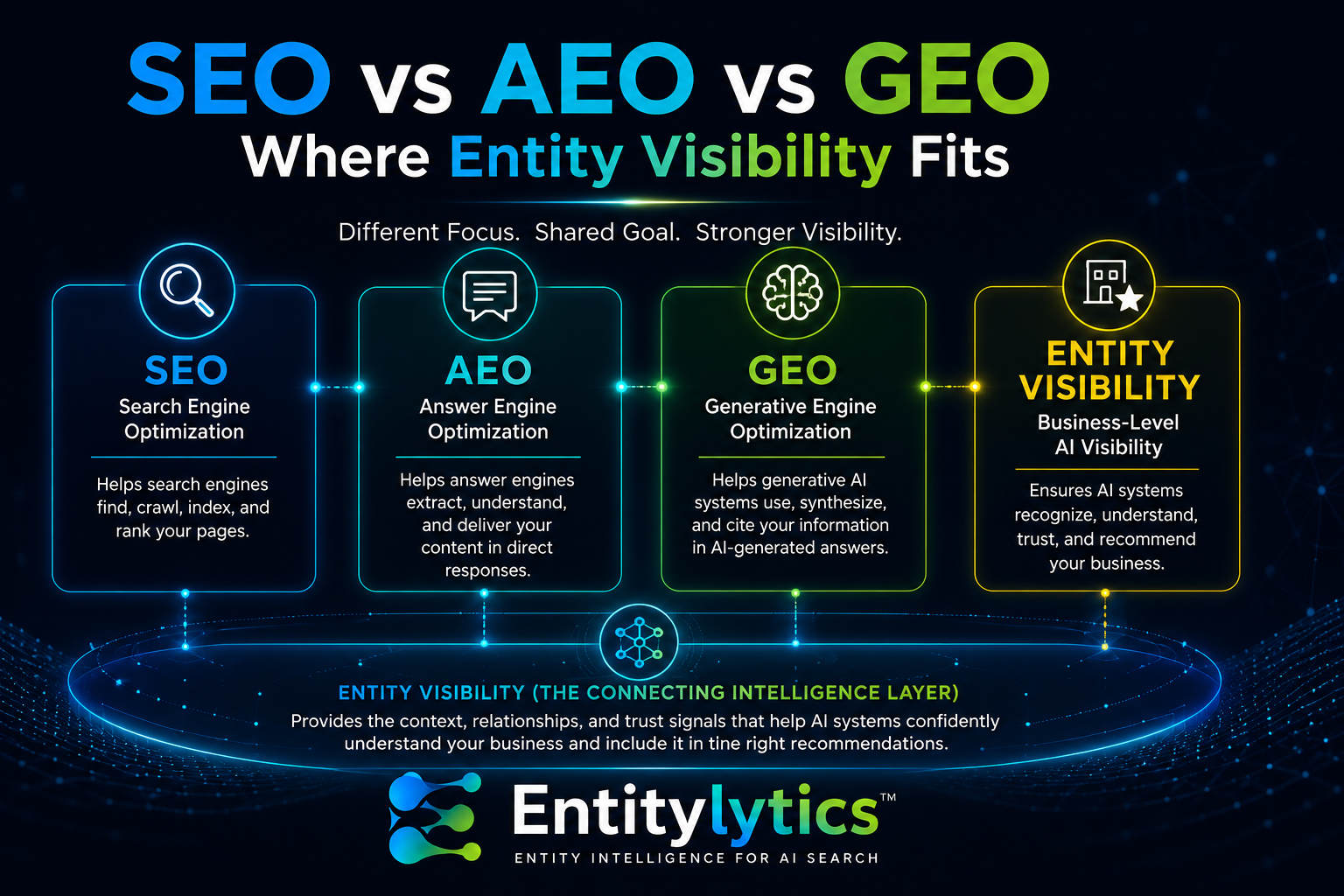
No. SEO helps pages become discoverable and competitive in search. Business evidence supports AI understanding, trust confidence, entity clarity, and recommendation readiness.
What kind of evidence is most useful?
Useful evidence includes specific reviews, credentials, service details, team background, policies, case examples, third-party mentions, consistent business profiles, and clear recommendation context.
How does Entitylytics evaluate trust evidence?
Entitylytics™ reviews how available evidence supports entity understanding, trust confidence, and recommendation readiness. The assessment identifies gaps, ambiguity, weak signals, and opportunities to strengthen AI visibility.
Find out whether your evidence supports AI trust
An Entitylytics™ Assessment can help identify whether your reviews, mentions, trust signals, and public business evidence are strong enough to support AI understanding and recommendation confidence.
Entitylytics™ helps businesses evaluate AI visibility, entity understanding, trust signals, and recommendation readiness.